

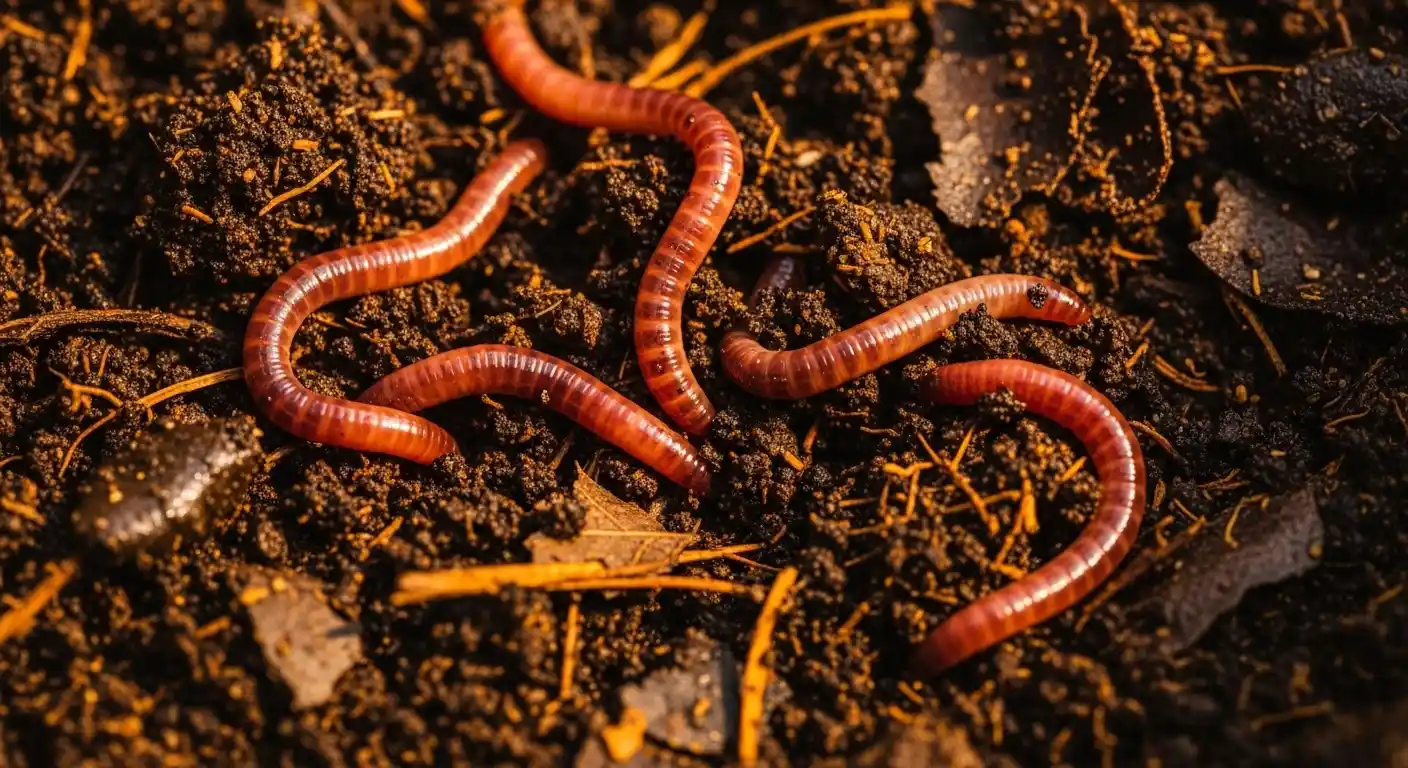

If you’ve been searching for the best worms for vermicomposting comparison, you already know the problem – most guides just say “get red wigglers” and stop there.
But what if you live in a tropical climate? What if you also fish? What if you want faster castings?
The truth is, the right worm depends on your setup, your climate, and your goals. This guide gives you a straight, no-fluff comparison of the top species so you can make a confident choice from day one.
Why Not All Worms Work in a Worm Bin
Before the comparison, here’s something most articles skip: regular garden worms are terrible for vermicomposting.
Common earthworms like the Canadian Nightcrawler (Lumbricus terrestris) are deep burrowers – they need several feet of soil to survive and will escape or die in a shallow bin.
The worms you want are called epigeic species – surface dwellers that thrive in decomposing organic matter, reproduce quickly, and eat voraciously in tight spaces. That distinction alone narrows your list to just a handful of species.
Also Read: Worm Bin Barometric Pressure: Why Worms Sense Storms
The 5 Best Vermicomposting Worms Compared
1. Red Wiggler — Eisenia fetida ⭐ Best Overall
The gold standard of vermicomposting. Red wigglers eat up to half their body weight daily, reproduce fast (doubling their population every 60–90 days), and tolerate a wide temperature range of 55–95°F.
They’re available almost everywhere and are the most affordable option. For beginners in temperate climates, this is the clear winner.
Best for: Beginners, indoor bins, temperate climates
2. European Nightcrawler — Eisenia hortensis
Larger than red wigglers and better suited to cooler temperatures. They reproduce more slowly — about half the rate of red wigglers — but their bigger body size means they’re also a great fishing worm, giving you a two-for-one value.
They produce excellent quality castings and handle cold snaps better than most other species.
Best for: Cold climates, fishing + composting combo, premium casting quality
3. African Nightcrawler — Eudrilus eugeniae
One of the fastest composters available when conditions are right. The catch? They need warmth – a consistent 70°F minimum.
In tropical environments they’re exceptional, producing large, nutrient-dense castings at impressive speed. In colder climates, they struggle and are not recommended.
Best for: Tropical climates, large-scale operations, high-quality castings
4. Indian Blue Worm — Perionyx excavatus
Native to India and Southeast Asia, this species thrives in hot, humid conditions where red wigglers can slow down.
They’re fast decomposers but have one known quirk — they tend to escape if bin conditions aren’t consistently ideal. With proper management, they’re an excellent choice for warm-climate vermicomposters.
Best for: Tropical and subtropical climates, fast decomposition
5. Eisenia andrei — Red Wiggler’s Twin
Nearly identical to Eisenia fetida in performance and appearance (just without the tiger stripes). Most commercial “red wiggler” bags are actually a mix of both species.
If you’re buying red wigglers, there’s a good chance Eisenia andrei is already in there — and that’s perfectly fine.
Best for: Same applications as red wigglers; often bought without realizing it
Side-by-Side Comparison Table
| Species | Temp Range | Composting Speed | Reproduction | Best Climate | Beginner-Friendly |
|---|---|---|---|---|---|
| Red Wiggler | 55–95°F | High | Very Fast | Temperate | ✅ Yes |
| European Nightcrawler | 50–80°F | Medium | Moderate | Cool | ✅ Yes |
| African Nightcrawler | 70–85°F | Very High | Fast | Tropical | ⚠️ Intermediate |
| Indian Blue Worm | 65–85°F | High | Fast | Tropical | ⚠️ Intermediate |
| Eisenia andrei | 55–95°F | High | Very Fast | Temperate | ✅ Yes |
Which Worm Is Right for You?
- Complete beginner with an indoor bin? → Red Wiggler
- Live in a hot, humid climate? → Indian Blue or African Nightcrawler
- Live somewhere cold? → European Nightcrawler
- Want to also use worms for fishing? → European Nightcrawler
- Running a large tropical operation? → African Nightcrawler
The Most Common Mistake New Vermicomposters Make
Buying regular garden worms or Canadian Nightcrawlers because they seem “natural.” They aren’t built for bins and most will die within weeks. Always buy from a reputable vermicomposting supplier, not a bait shop.
Final Verdict
For most people, the Red Wiggler (Eisenia fetida) is the best choice — it’s forgiving, fast, and easy to find.
If you’re in a warm climate, the Indian Blue or African Nightcrawler will serve you better. And if you run cold, the European Nightcrawler is your answer.
Start with the right species and your worm bin will practically run itself. Ready to get started? Check out our guide on setting up your first worm bin.

Leave a Comment