

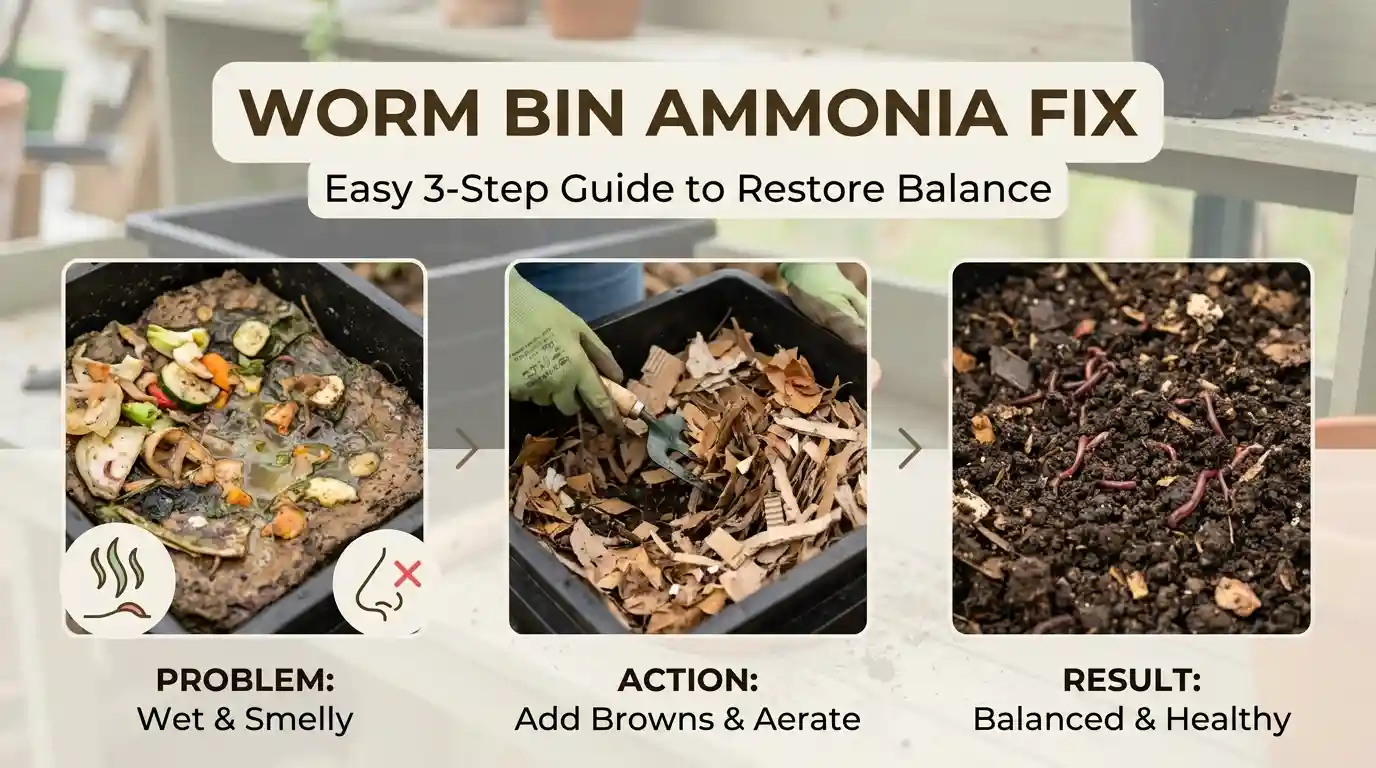

That sharp, urine-like ammonia smell when you open your worm bin is a classic distress signal. It usually means your worms are sitting in anaerobic conditions with too much nitrogen and not enough carbon or oxygen.
The good news? This is one of the fastest vermicomposting problems to fix. In most cases, you can eliminate the ammonia smell within 24–48 hours using just three straightforward steps.
Here’s exactly what to do.
Why Your Worm Bin Smells Like Ammonia
Ammonia forms when nitrogen-rich material (vegetable scraps, greens, coffee grounds, etc.) breaks down without enough oxygen or carbon to balance it. Common triggers include:
- Overfeeding or adding too many “greens”
- The bin staying too wet
- Poor aeration (especially in plastic bins with limited airflow)
- Food sitting on top and starting to rot before the worms can process it
Red wigglers are very sensitive to ammonia. A strong smell means you need to act quickly to protect them.
What You’ll Need
- Dry carbon materials (shredded cardboard, newspaper, dry leaves, or coir pith)
- Garden fork, trowel, or gloved hands
- Optional: finished compost or extra dry bedding for the bottom
Step 1: Stop Feeding and Remove Excess Food
The first and most important action is to stop adding new food immediately.
Gently lift the top layer and remove any uneaten scraps, especially soft fruits, vegetables, or anything that looks slimy or moldy. If one area is particularly wet and smelly, scoop that section out and set it aside (you can add it to an outdoor compost pile later).
This single step often reduces the smell dramatically within hours because you’re removing the main source of excess nitrogen.
Pro tip: In warm, humid climates (like many parts of India), food breaks down faster, so it’s easy to overfeed without realizing it.
Step 2: Add Plenty of Dry Carbon Bedding
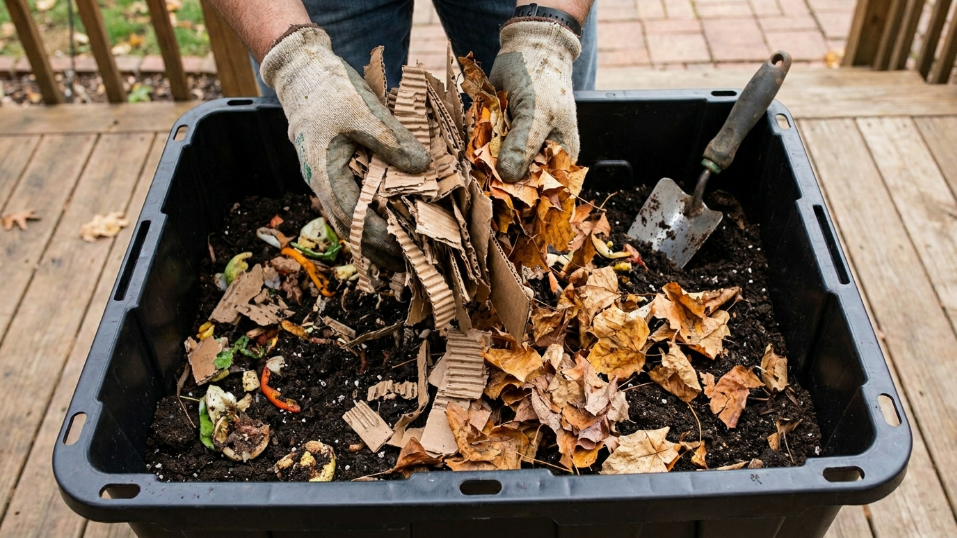
This is the most effective fix for ammonia smell.
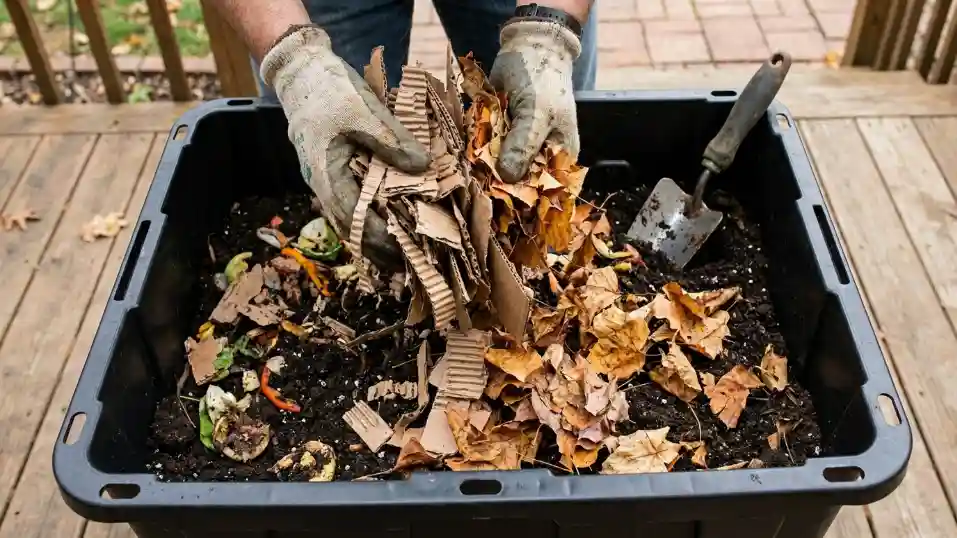
Add a generous layer (5–8 cm / 2–3 inches) of dry “browns” on top:
- Shredded cardboard or newspaper (avoid glossy paper)
- Dry leaves or straw
- Coir pith or sawdust (in moderation)
Gently work some of the dry material into the top 10–15 cm of the bin. The carbon absorbs excess moisture and gives the system the balance it needs.
Your goal is to bring the moisture level back to that of a well-wrung sponge — damp but not soggy.
Step 3: Aerate Thoroughly and Improve Airflow
Ammonia smell almost always signals a lack of oxygen. Now it’s time to give the bin some air.
Using a garden fork or your hands, gently fluff and turn the top layers. You don’t need to mix the entire bin – just loosen everything so air can reach deeper. If your bin has a solid lid, leave it slightly ajar or switch to a breathable cover (burlap, old towel, or screen) for a few days.
If possible, move the bin to a spot with better airflow — out of direct sun and away from walls that trap humidity.
Within a day you should notice the ammonia smell fading and being replaced by a mild earthy scent.
Common Mistakes That Make the Smell Worse
Many people accidentally prolong the problem by doing these things:
- Adding more food to “help the worms” — this makes it worse
- Only adding greens without balancing browns
- Keeping the lid tightly closed in warm weather
- Letting the bin sit in standing water or on a wet surface
- Ignoring the moisture level — too wet is the #1 cause of recurring smells
How to Prevent Ammonia Smell in the Future
Once the smell is gone, follow these habits:
- Feed lightly — no more than what the worms can process in 2–3 days
- Always bury food under bedding
- Maintain a good mix of greens and browns (roughly 1:2 or 1:3 ratio)
- Check moisture weekly — add dry bedding whenever it feels too wet
- Harvest castings regularly so the bin doesn’t become compacted
Frequently Asked Questions
How long does it take for the ammonia smell to go away?
Most people notice a big improvement within 24 hours and a completely normal smell within 2–3 days after following the three steps.
Can ammonia kill my worms?
Yes, high levels of ammonia are toxic to red wigglers. That’s why fixing it quickly is important. If left unaddressed long enough, the nitrogen buildup can also trigger protein poisoning (string of pearls syndrome) — a separate but related condition worth knowing about.
Should I add new worms right away?
Wait until the smell is completely gone and conditions feel balanced again. Then you can add more if your population dropped.
Is it safe to use the compost that had an ammonia smell?
Once the smell is gone and the material has stabilized for a couple of weeks, it’s usually fine to use in the garden. Just avoid using it on seedlings until you’re sure it’s mature.
Ready to Get Your Worm Bin Back on Track?
The ammonia smell is actually a helpful warning sign — it tells you exactly what your bin needs: less nitrogen, more carbon, and more air.
Follow the three steps above and you’ll have a healthy, odor-free worm bin again in no time.
Want a printable one-page checklist for quick reference? Drop your email below and I’ll send it to you along with monthly vermicomposting tips.
Have you dealt with this issue before? Tell me what worked (or didn’t) in the comments – I read every one.
Happy composting!

Leave a Comment