

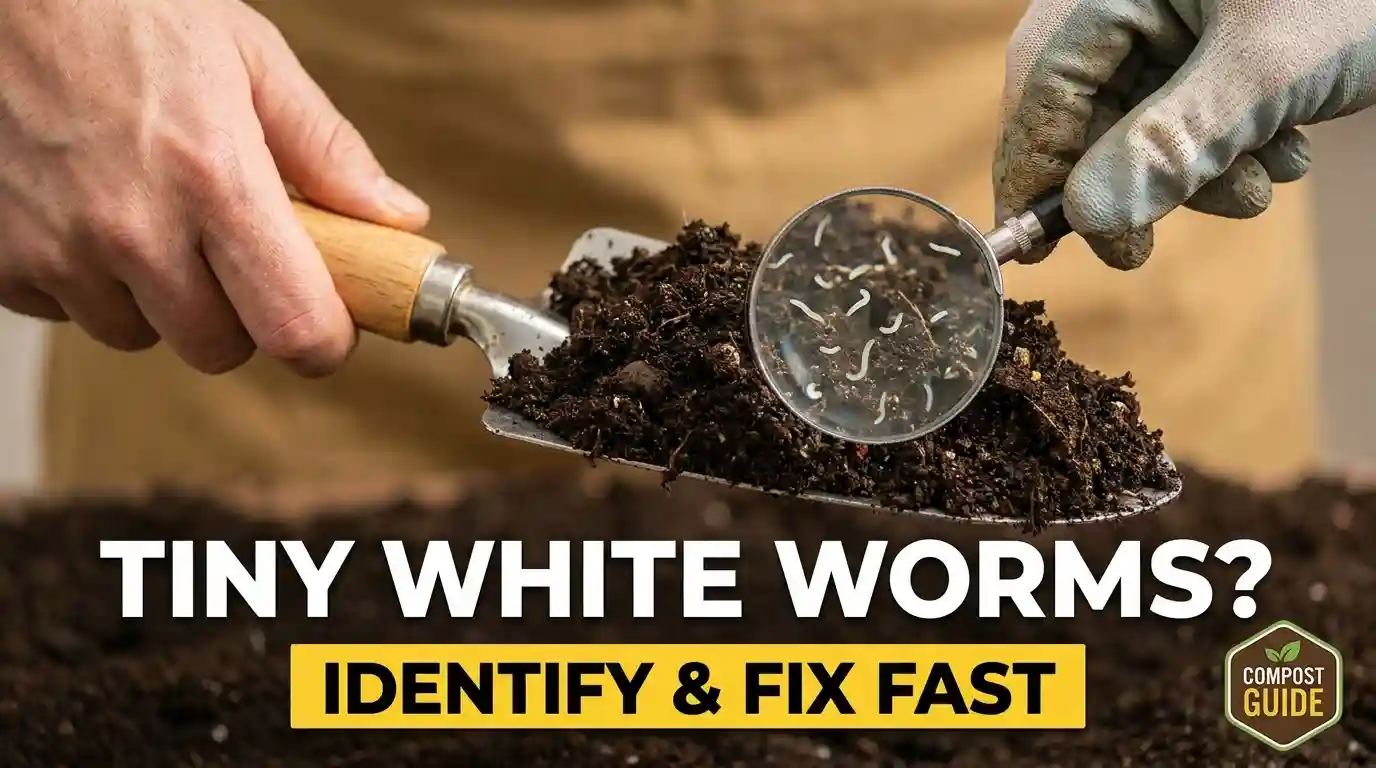

Tiny White Worms in Compost
They’re not attacking your bin. They’re grading it.
You opened the lid and panicked. Hundreds of tiny white worms, wriggling in the top layer. Your first thought: infestation. Your second thought: are my red wigglers dying?
Neither. Pot worms (also called white worms, Enchytraeidae if you want the fancy name) are showing up because your bin conditions changed – not because something is wrong with your worms.
Here’s the thing almost nobody tells you: pot worms are an indicator species. They’re not the problem. They’re the smoke alarm.
1. What are these worms, actually?
Pot worms are small, pale, segmented worms – usually under an inch, semi-translucent, and fast-moving compared to your red wigglers.
They eat the same decomposing organic matter your worms do. They don’t bite, sting, or harm your worms directly.
But a sudden explosion in their numbers means your bin just tipped into conditions your red wigglers don’t love: too wet, too acidic, or both.
★ Remember. Pot worms don’t cause bad conditions. Bad conditions cause pot worms.
2. Why they showed up in your bin
✦ Old assumption: “Something got into my bin from outside.”
✦ Actual cause: You overfed it. Probably with something starchy – rice, bread, pasta – or you added too much wet food waste at once, and the bedding turned too wet and acidic to keep the balance your bin needs..
Pot worms thrive exactly there. Red wigglers don’t. That’s the whole story.
✓ Tip. If you added rice, oats, or bread in the last two weeks, that’s your prime suspect. Not “mystery contamination.”
3. Are they actually harmful?
Short answer: not directly.
Longer answer: they compete with your red wigglers for food. At low numbers, ignore them. At high numbers, they’ll out-eat your wigglers and stall your composting.
Think of it as a lease dispute, not an invasion.
4. The fast fix (do this today)
- Stop feeding for a week. Remove any wet or fermenting scraps sitting in the bin.
- Add dry carbon. Shredded cardboard, dry leaves, or paper. Bulk amounts, not a sprinkle.
- Leave the lid cracked (or off, if it’s indoors and safe) to let excess moisture evaporate.
- Add crushed eggshells or a small amount of garden lime to nudge pH back up.
- Wait 5–7 days. Population should visibly drop.
That’s it. No chemicals, no rebuild, no panic.
⚠ Warning. Don’t add lime aggressively to “fix” it fast. Red wigglers actually prefer mildly acidic conditions – overcorrect and you’ll stress your worms worse than the pot worms ever did.
5. Where this approach doesn’t work
Being honest here, because a guide that only tells you the upside isn’t a guide, it’s an ad.
- If your bin is a bucket with no drainage, drying it out barely moves the needle – the moisture has nowhere to go. The same too-wet, too-acidic conditions also trigger worms trying to escape the bin, so check for that too.
- If you’re in a genuinely humid climate (parts of Florida, coastal regions), you may be fighting this every few weeks. Structural airflow fixes matter more than one-time drying.
- If pot worms have been dominant for months, not days, your red wiggler population may already be reduced. Expect a slower recovery, not an overnight fix.
Where to start
Pull any wet food out today. Add dry bedding tonight. Check again in a week.
If they’re still exploding after that, the problem isn’t the pot worms – it’s something structural in the bin. That’s a different fix.
Pot worms are a symptom. Treat the bin, not the worms.
PS: If this saved you from dumping out a perfectly good worm bin, send it to whoever’s about to do the same thing.

Leave a Comment