


I was wrong about my worm bin. Again.
Eighteen days ago, I fed my indoor VermiHut two things side by side: a pile of whole scraps – beet, pomegranate skins, banana, a few vegetables – and a separate blob of the exact same food, blended into a paste. My assumption was simple: the blended blob would break down at least as fast as the whole pieces, maybe faster.
I was wrong on both counts, and the gap between them is bigger than I expected.
What Actually Disappeared First
I run timelapse cameras on this bin, so I’m not guessing – I have the day-by-day record.
Eggshell grit vanished first, before anything else. Lettuce was gone in 4 days. By day 5, the entire blended blob – top and bottom – had disappeared completely. Strawberry flesh, grapes, and banana peels followed over the next several days.
The beet took 11 days before the worms even really committed to it.
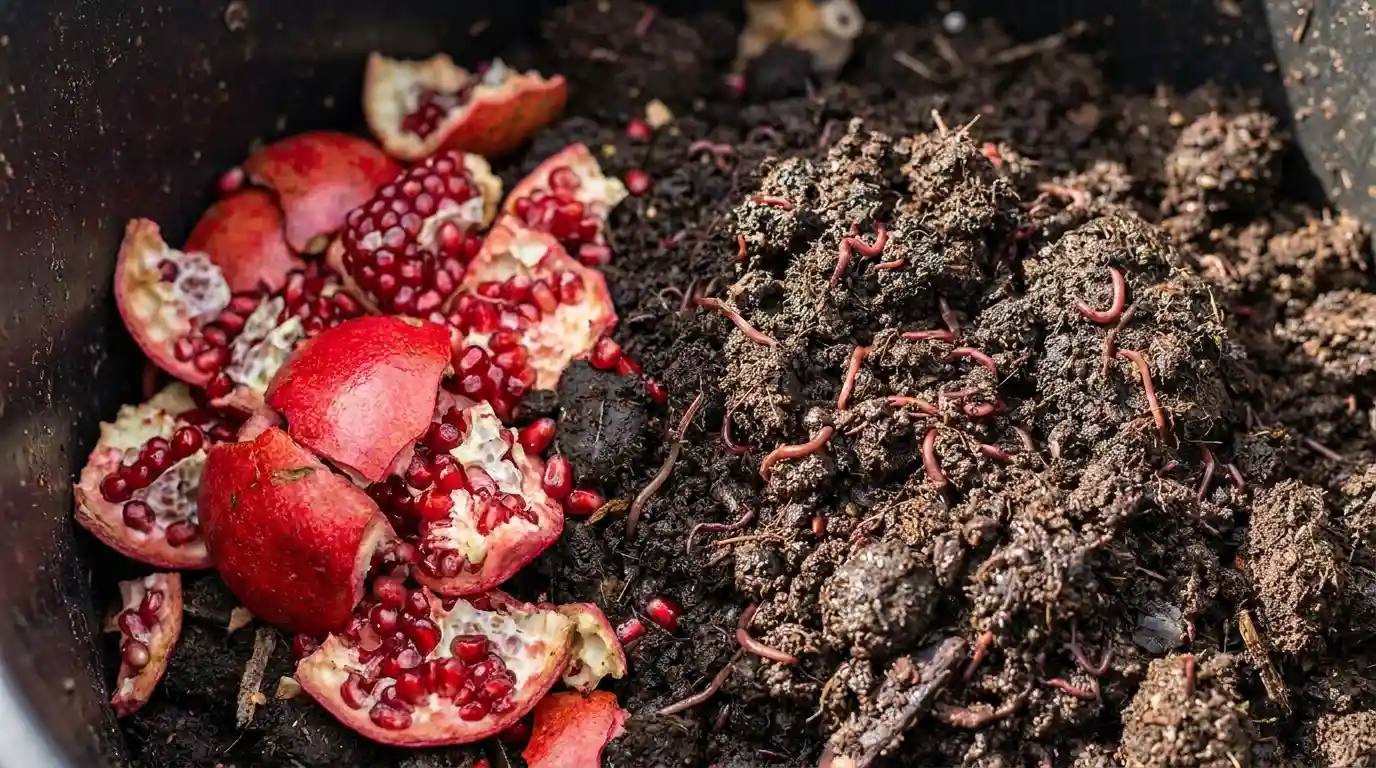
And the pomegranate skins? At day 18, they were essentially untouched. A little mold, one worm nearby, no real feeding activity. They might as well have been rocks.
The Part That Surprised Me
I expected the opposite outcome. My working theory going in was that a solid blob of blended food would take longer to break down than individual pieces – that it would compact, maybe ferment, and sit there. Instead it disappeared faster than almost everything except lettuce and eggshell grit.
Meanwhile two foods I assumed were “easy” – beet and pomegranate skin — turned out to be some of the slowest things I’ve ever fed this bin. That tracks with what composting extension research generally notes: worms break down soft fruit and vegetable matter fastest, while tougher, more acidic materials take considerably longer.
So if you’re wondering whether to blend your worm food: yes, do it. Blending speeds things up. That part of the common advice holds. What doesn’t hold is the assumption that all whole scraps decompose at a similar pace. Texture and skin toughness matter more than I’d been giving them credit for.
What This Means for Your Bin
If you’re feeding beet or pomegranate skins, don’t treat them like a 3–5 day food the way you would lettuce or blended scraps. Bury them and expect them to sit for two-plus weeks. That’s not a problem – it’s actually useful. Tougher, slow-digesting foods like these work well as a long-term food source if you’re going away for a stretch and don’t want to add fresh food regularly.
One caution if you’re newer to worm composting: I’m feeding this heavily because I have roughly 5,000 worms in this tray. If you’re just starting a bin, don’t mirror this feeding volume – overfeeding is the number one cause of new-bin failure.
Too much food too fast leads to ammonia buildup, and worms will flee or die rather than tolerate it. Go lighter than you think you need to, and let the population catch up before scaling feeding.
The Takeaway
Not all “easy” foods are actually easy for worms. Skin toughness and moisture content predict decomposition speed better than what you’d assume from looks alone – and blending remains one of the most reliable ways to speed up the whole process, contrary to what I expected going in.
Curious what other slow-digesting foods might surprise you the same way pomegranate skin did? That’s the next experiment on this bin.

Leave a Comment