

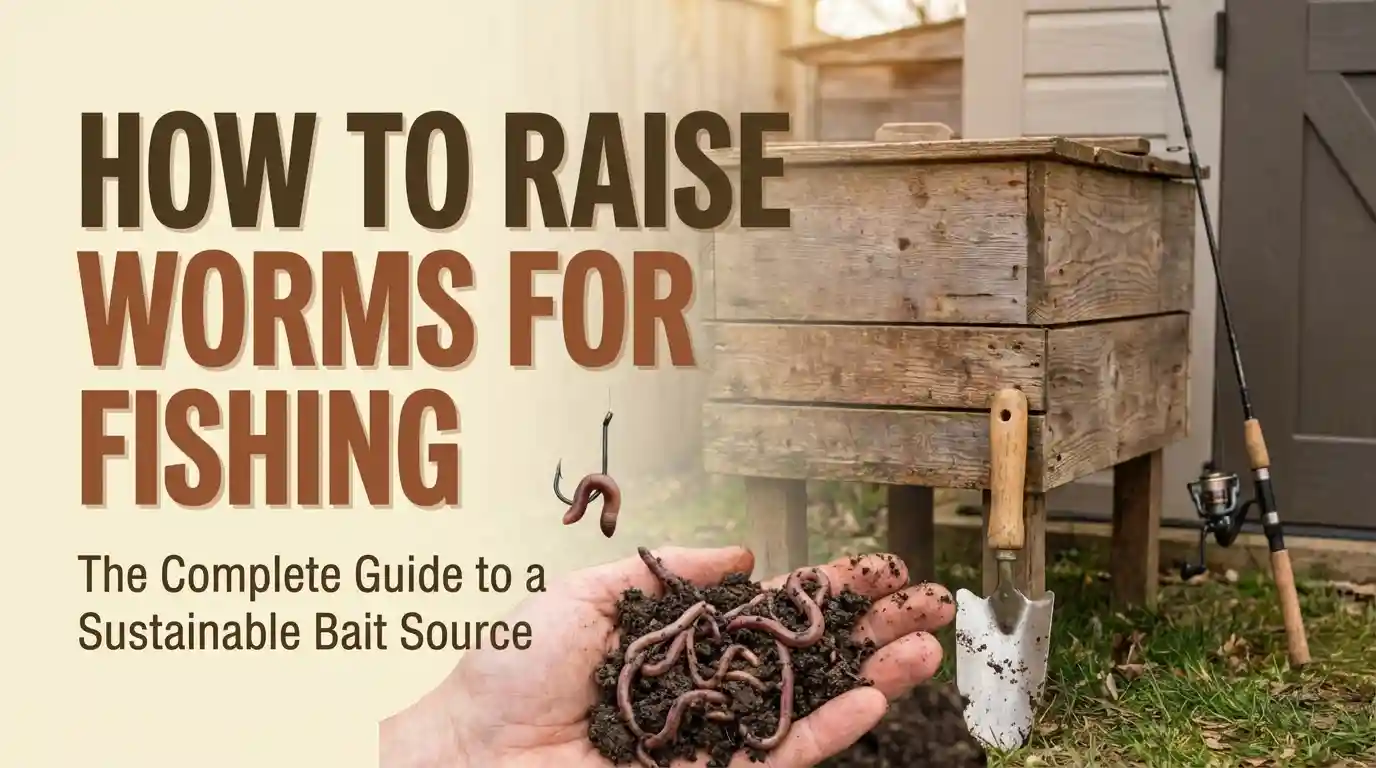

Stopping by the bait shop every time you want to fish gets expensive and inconvenient fast. If you fish regularly, keeping your own supply of live worms at home makes far more sense.
You save money, you always have fresh and lively bait on hand, and as a bonus the worms produce rich compost that does wonders for your garden.
Raising worms at home is easier than most people expect. All it takes is a bin, some bedding, the right worms, and a little routine care.
Types of Worms for Fishing
The three most popular worms for fishing are:
- Red Worms (Red Wigglers)
- European Nightcrawlers (Super Reds)
- African Nightcrawlers
Draw on your own fishing experience to decide which type suits you best. Some anglers prefer red worms for panfish like bluegill and crappie.
Others rely on European Nightcrawlers for larger fish like bass, trout, and walleye. Most agree that the European Nightcrawler is the most versatile option for freshwater fishing overall.
If you are still deciding between species, this detailed guide to the best worms for vermicomposting compares Red Wigglers, European Nightcrawlers, African Nightcrawlers, and other common bin worms by climate, breeding speed, and practical use.
European Nightcrawlers as Fishing Bait
Fat, active, and tough-skinned, European Nightcrawlers are the top choice for most freshwater anglers. They grow 4 to 5 inches long, hold firmly on a hook, and stay lively in the water far longer than other species. They handle a wider temperature range than most worms, which makes them easier to raise year-round in a home bin.
Setting up a bin for European Nightcrawlers is straightforward. Here is the basic checklist:
- Find a suitable location for your worm bin — a basement, garage, or shaded area works well. Keep temperatures between 60 and 75 degrees Fahrenheit for best results.
- Build or buy a worm bin. A plastic storage tote with a lid works perfectly. Drill small air holes around the sides and lid, and a few drainage holes in the bottom. Place a shallow tray underneath to catch runoff.
- Fill the bin with 4 to 6 inches of moist bedding. Shredded cardboard, coconut coir, or peat moss all work well. The bedding should feel like a wrung-out sponge — moist but never soggy.
- Place the worms gently on top of the bedding and leave a light on over the bin for the first night. They will burrow into the bedding to escape the light and settle in quickly.
- Feed them a few times per week once they have adjusted to their new home. See feeding instructions below.
Whenever you need bait, move the bin into a brightly lit area for 10 to 15 minutes. The worms will instinctively move downward, making it easy to collect from the surface layer without disturbing the entire bin.
Red Worms as Fishing Bait
Red Wigglers are smaller and softer than nightcrawlers, making them ideal for panfish. They are also the best composting worm available, so your bin will produce excellent worm castings alongside your bait supply.
They reproduce faster than any other fishing worm, which means you build up a large population quickly.
Follow the same bin setup steps listed above for European Nightcrawlers. Red Worms prefer temperatures between 55 and 77 degrees Fahrenheit.
One practical advantage with Red Worms is that most of them tend to stay in the upper layers of the bin, making them very easy to find when you are ready to head out fishing.
African Nightcrawlers as Fishing Bait
African Nightcrawlers are large, highly active, and extremely attractive to fish. However, they require warmer temperatures between 70 and 90 degrees Fahrenheit and will die if temperatures drop below 45 degrees.
They are best suited for anglers in warmer climates or those who can maintain a consistently warm indoor bin. If your location supports those conditions, they are a powerful fishing worm worth raising.
Feeding Your Worms
Worms are inexpensive to feed and thrive on ordinary kitchen scraps. Feed them two to three times per week, burying food just beneath the surface of the bedding to reduce odor and discourage flies.
Foods worms do well on:
- Vegetable and fruit scraps — avoid citrus
- Coffee grounds and used tea leaves
- Crushed eggshells, which also balance bin pH
- Shredded plain cardboard and paper
- Untreated grass clippings
Foods to avoid:
- Meat, fish, and dairy products
- Cooking oils and greasy foods
- Spicy or heavily salted scraps
- Pet waste
Avoid overfeeding. If the previous meal has not been fully consumed, wait before adding more. A bin that is overfed will rot, smell bad, and stress your worms.
Breeding Your Worms
Worms are hermaphroditic, meaning every worm in the bin can produce offspring. Two worms mate and both lay cocoons. Each cocoon hatches two to five baby worms. Under good conditions a healthy bin can double in population every two to three months, giving you a growing, self-sustaining bait supply.
Stable moisture, consistent temperatures, and regular feeding are the three things that drive reproduction. Keeping the bin dark and undisturbed as much as possible also encourages faster breeding.
Troubleshooting Your Worm Bin
Worm bins are simple to manage, but a few problems can come up from time to time.
Worms escaping the bin usually means conditions are too wet, too warm, or too acidic. Add dry shredded cardboard to absorb excess moisture and check that the temperature is within the right range.
A foul smell from the bin is almost always caused by overfeeding or blocked airflow. Remove uneaten food, add fresh dry bedding, and make sure the air holes are clear.
Fruit flies around the bin can be controlled simply by burying all food scraps beneath the bedding surface rather than leaving them exposed on top.
White mites appearing in large numbers signal that the bin is too wet. Let it dry out slightly and cut back on high-moisture foods for a while.
Conclusion
Raising your own fishing worms is one of the smartest and most practical things a regular angler can do. The setup is affordable, the upkeep is minimal, and within a few months you will have a healthy, self-sustaining supply of lively bait ready whenever you need it. You also get free garden fertilizer every time you harvest the bin. Start with European Nightcrawlers or Red Wigglers, get a simple bin running, and you will never have to worry about finding an open bait shop again.

Leave a Comment