

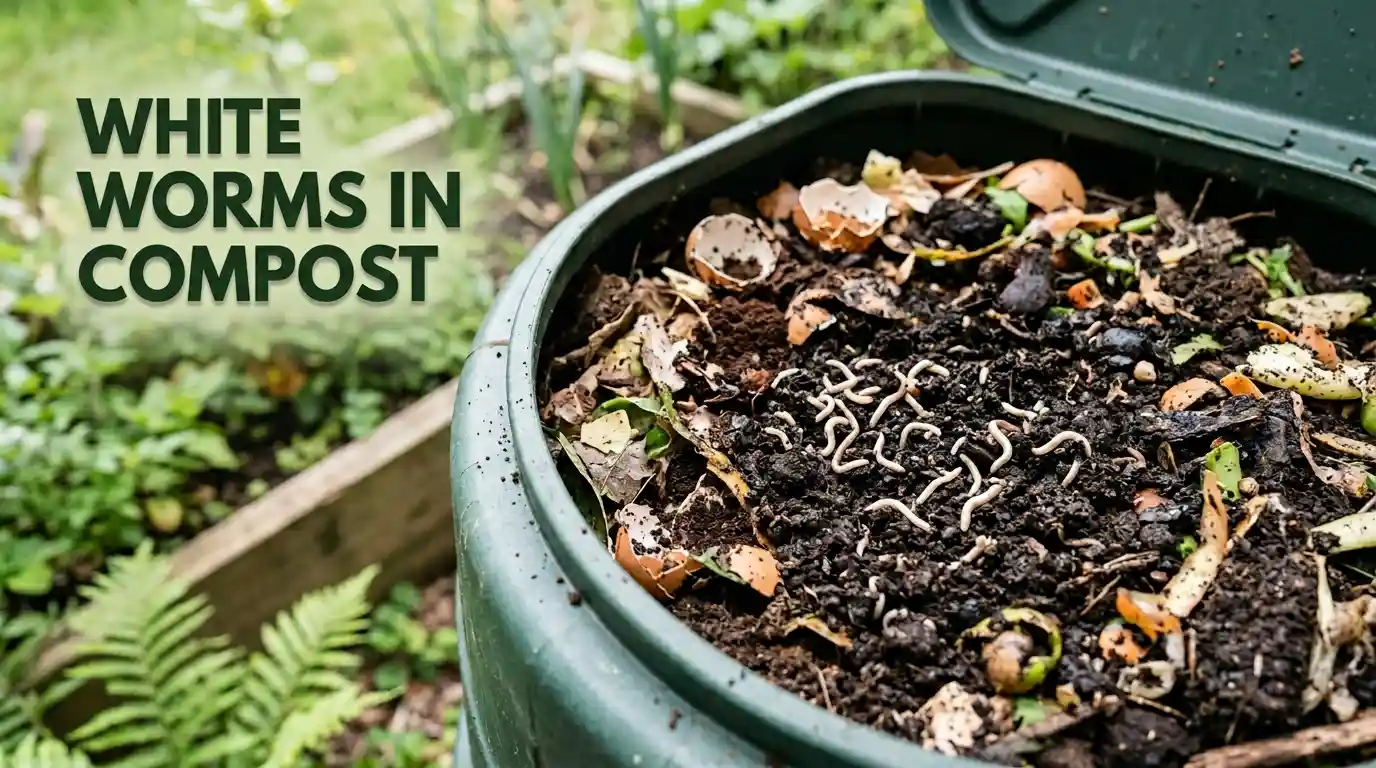

You lift the lid off your compost tumbler or pull back the top layer of your worm bin, and your heart sinks. Instead of rich, dark earth and happy Red Wigglers, the pile is absolutely crawling with white worms.
Some are tiny and look like moving pieces of thread. Others are plump, segmented, and aggressively squirming through your food scraps.
Your immediate reaction is probably a mix of disgust and panic: “Is my compost ruined? Did I breed maggots? Do I need to throw the whole pile away?”
Take a deep breath. Your compost is not ruined. In fact, depending on which white worm has moved in, your compost might actually be breaking down faster than ever.
In the composting world, a “white worm” can mean three very different things. Let’s identify exactly what has invaded your pile, figure out if they are friends or foes, and show you exactly how to take control of your compost again.
Quick Answer: The 3 Types of “White Worms”
- The Tiny Threads (Pot Worms): Very thin, stark white, and measure about 1/4 to 1/2 inch. Verdict: Harmless, but a sign your pile is too wet and acidic.
- The Squirmy Footballs (BSFL / Maggots): Plump, segmented grubs that wriggle violently. They might start white and turn brown later. Verdict: Gross looking, but incredibly beneficial composters.
- The Fat “C” Shapes (Beetle Grubs): Thick, white, slow-moving grubs with distinct brown heads, usually curled up. Verdict: Harmless to compost, but bad for your garden (they eat plant roots).
Also Read: How to Make a Worm Bin From a Styrofoam Cooler: DIY Guide
Myth-Busting: “They Are Eating My Earthworms!”
A common fear is that these pale invaders are predatory parasites sent to devour your prized Red Wigglers or garden worms.
The Truth: Almost no common white compost worm is predatory. They are “detritivores.” This means they only have an appetite for dead, rotting organic matter. If you see white maggots swarming a dead earthworm, they didn’t kill it—they are simply doing their job as nature’s cleanup crew after the earthworm died of natural causes (like old age or a pH spike).
1. The Tiny Threads: Pot Worms (Enchytraeids)
If your compost looks like someone dropped a handful of animated white sewing thread into the dirt, you are dealing with pot worms.
What’s Happening?
Pot worms are naturally occurring soil dwellers. They don’t turn into flies or beetles; they stay tiny worms forever. They usually show up by the thousands overnight.
- Why they are there: Your compost pile or worm bin has become highly acidic (low pH) and excessively wet.
- Are they dangerous? No. They won’t hurt you or your plants.
- The Fix: You need to dry the pile out and buffer the acid. Mix in massive amounts of dry “browns” (shredded cardboard, dry leaves, or sawdust) and sprinkle a cup of crushed eggshells or garden lime to neutralize the acidity.
2. The Squirmy Footballs: Black Soldier Fly Larvae (BSFL)
If the worms are plump, highly active, deeply segmented, and look like oversized maggots, congratulations! You have attracted the “heavy machinery” of the compost world.
What’s Happening?
The adult Black Soldier Fly (which looks like a sleek, black wasp but has no stinger) laid eggs in your compost. These larvae are voracious eaters.
- Why they are there: You likely have a lot of exposed “greens” (kitchen scraps, fruit, or even meat/dairy if you aren’t careful) near the surface.
- Are they dangerous? Are they dangerous? Absolutely not. BSFL are actually prized by many composters for how quickly they process waste, if you want the science behind that, Purdue Extension has a solid Black Soldier Fly composting guide.
- The Fix: You don’t need to fix it. Let them work! But if they gross you out, simply bury your kitchen scraps under a 4-inch layer of dry leaves or shredded paper. The adult flies cannot dig, so they won’t lay eggs if the food is hidden.
3. The Fat “C” Shapes: Beetle Grubs
If you are turning an outdoor compost pile and unearth fat, milky-white, slow-moving grubs curled into a “C” shape, you’ve found beetle larvae (often June Bugs or Japanese Beetles).
What’s Happening?
Adult beetles love the warm, loose, nutrient-dense environment of a compost pile to lay their eggs.
- Why they are there: It’s a safe, warm incubator for the winter.
- Are they dangerous? In the compost pile? No, they just eat dead roots. In your garden? YES. If you spread compost full of grubs into your garden beds, they will hatch and eat the roots of your living vegetables and lawns.
- The Fix: When you sift or turn your compost, physically pick these out. Toss them into a bird feeder or leave them on an open rock—local birds will consider them a gourmet treat.
5-Minute Diagnosis: What to Check Right Now
Not sure if your pile is healthy or spiraling out of control? Run this quick test:
- The Smell Test: Does the compost smell like a forest floor? (Good). Does it smell like vinegar or rotten garbage? (Bad—you have a moisture/acid problem attracting Pot Worms).
- The Squeeze Test: Grab a handful of compost (wear gloves if you prefer). Squeeze it hard. If water streams out, your pile is drowning. Add dry cardboard immediately.
- The Heat Check: Is the pile steaming hot? BSFL love the heat, but earthworms will flee.
How to Evict White Worms (If You Really Want To)
If you simply cannot stomach looking at squirming white larvae, here is the guaranteed, chemical-free way to reset your compost pile:
- Stop Feeding Greens: Halt all kitchen scraps, coffee grounds, and fresh grass clippings for two weeks.
- The “Brown Out”: Cover the entire surface of the compost with a thick, 4-to-6-inch layer of dry brown material (shredded brown paper bags, dry autumn leaves, or straw).
- Turn the Pile: Grab a pitchfork and aggressively flip the compost. This introduces oxygen, cools down hot spots, and disrupts the breeding cycle of flies and beetles.
FAQ: Compost Invaders
Are maggots in compost safe for vegetable gardens?
Yes! If you have Black Soldier Fly Larvae, the compost they leave behind (called “frass”) is incredibly nutrient-dense. Once they mature and fly away, the compost is perfectly safe for tomatoes and veggies.
Will these worms get into my house?
If your bin is outside, no. If you have an indoor worm bin with an explosion of Pot Worms, they still won’t leave the bin. They require a very high moisture level to survive; the dry air of your living room would kill them in minutes.
Should I use bug spray on the compost?
Never. Pesticides will poison your compost, kill your beneficial microbes, and subsequently poison the soil of any plants you try to grow with it.
Summary: A Sign of an Active Ecosystem
Finding white worms in your compost is rarely a sign of failure. Usually, it just means nature has stepped in to help you break down your food waste.
- Pot worms are telling you to dry things out.
- Grubs are telling you to sift before you plant.
- BSFL are just telling you to sit back and watch them eat.
Keep your greens buried, keep your browns plentiful, and let the bugs do the heavy lifting!

Leave a Comment