


You’re doing a routine check of your worm bin, lifting a handful of bedding, when you see something that makes your skin crawl—and not in the good “I love worms” way.
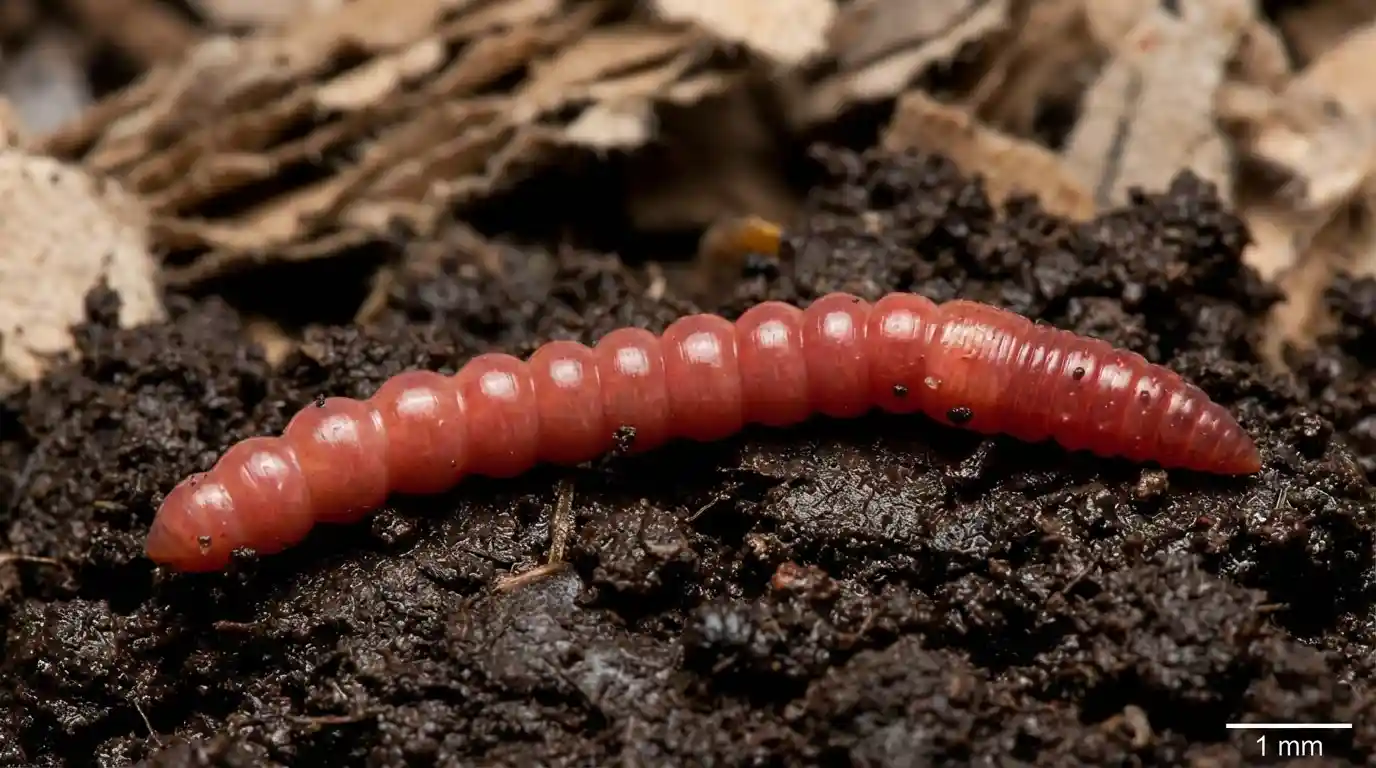
One of your Red Wigglers looks… deformed. Instead of a smooth, sleek body, it looks like a miniature string of pearls.
Its body is pinched in some places and bulging in others, creating a beaded, lumpy appearance. In some spots, it might even look like the worm is beginning to “break” or disintegrate.
This is the dreaded “String of Pearls” syndrome, also known as Protein Poisoning or Sour Crop.
If you see this, you are looking at a medical emergency for your worm colony. This isn’t just a “bad day” for the worm; it is a sign that the very chemistry of your bin has turned toxic.
But don’t dump the bin yet! While the affected worms usually cannot be saved, your entire colony can be rescued if you act in the next 24 hours.
🚨 Quick Answer: The “Red Alert” Protocol
- The Cause: High acidity and excess protein have caused food to ferment inside the worm’s gut.
- The Symptom: Beaded, lumpy, or “pinched” segments. The worm’s internal gasses are literally rupturing its body.
- The Emergency Fix: 1. Stop feeding all food scraps immediately. 2. Remove any visible rotting food or “clumps.” 3. Add 1 cup of crushed eggshells (Calcium Carbonate) to neutralize the acid. 4. Add 3-4 inches of dry shredded cardboard to the top.
- The Outcome: Healthy worms will recover; lumpy worms will likely die and be recycled by the bin.
1. Myth-Busting: “Is it a Disease?”
When people see “String of Pearls,” they think it’s a contagious virus or a parasite.
The Truth: Protein Poisoning is not a disease. You can’t “catch” it from another worm. It is a physiological failure caused by an environmental disaster. If one worm has it, others likely will soon, but only because they are all living in the same “sour” bedding. You don’t need to quarantine the “pearl” worms; you need to fix the bedding they are crawling in.
2. The Science: Why Do They Look Like Pearls?
To understand how to fix this, you have to understand the Calciferous Gland.
Worms have a tiny gland that acts like a miniature chemical processing plant. Its job is to excrete calcium to neutralize the acids in the food they eat.
For a deeper dive into how acidity leads to gut fermentation and rupture, check out Urban Worm Company’s guide on protein poisoning causes.
The Fermentation Trap: When you add too much protein (grains, bread, meat, or even too many sweet fruits) without enough bedding, the food begins to ferment. Fermentation creates gases (like ammonia and CO2) and alcohol.
If the bin is too acidic and lacks calcium, the worm’s calciferous gland can’t keep up. The acidic, fermenting food enters the worm’s intestine. Because a worm has no way to “burp” or pass gas easily, the fermentation continues inside the worm. The gas builds up, the pressure rises, and the intestine literally ruptures and bulges through the body wall.
That “pearl” look? It’s literally a gas bubble trapped inside a dying worm.
3. Top 4 Causes of “String of Pearls”
I. The “Grains of Death” (Too Much Protein)
Feeding your worms bread, pasta, oatmeal, or chicken mash is like giving them a high-octane fuel they can’t burn. These items ferment rapidly.
- The Trigger: High nitrogen + High moisture + Zero “Browns.”
II. Lack of Grit and Calcium
Worms use grit (sand, eggshells, rock dust) in their gizzards to grind food. If they can’t grind the food fast enough, it sits in their gut and starts to rot before it can be digested.
- The Trigger: Soft food only with no mineral supplements.
III. The “Sour Bin” (Low pH)
If you’ve been heavy on the coffee grounds or citrus, the bin’s pH can drop to 5.0 or lower. This acidity stings the worm’s skin and makes it impossible for their internal glands to function.
- The Trigger: Overfeeding acidic scraps.
IV. Anaerobic “Sludge”
If the bin is too wet, oxygen can’t get in. This allows anaerobic bacteria to take over. These bacteria produce toxic byproducts that contribute to the “Sour Crop” effect.
Also Read: Why Worms Crawl Out of Bin After Rain
4. 5-Minute Diagnosis: How to Spot it Early
Don’t wait for the “Pearls” to appear. Look for these Pre-Symptom Warning Signs:
- The Ammonia Whiff: Lift the lid. If you smell even a hint of Windex or ammonia, the bin is already fermenting.
- The “Protein Ball”: Are the worms huddled in a tight ball away from a specific food source? They are trying to escape a “hot spot.”
- Yellowing/Paleness: Healthy Red Wigglers are deep maroon. If they look “washed out” or yellowish, their internal organs are struggling.
- Mite Explosion: A sudden surge in white or red mites usually signals high acidity—the perfect precursor to protein poisoning.
5. The “Recovery” Action Plan (Step-by-Step)
If you see even one string-of-pearls worm, follow this exact sequence to save the rest:
Step 1: The “Scrap Excavation”
Grab a pair of gloves and a hand rake. Dig out every single piece of unconsumed food you can find. If it’s mushy, smelly, or fuzzy—it goes in the outdoor compost. You want the bin to have zero nitrogen for at least 7 days.
Step 2: The “Calcium Buffer”
This is the most critical step. You must raise the pH immediately.
- Action: Pulverize 10+ eggshells into a fine dust. Sprinkle it over the entire surface.
- Why: The calcium carbonate stops the acid in its tracks and gives the surviving worms the minerals they need to “re-start” their calciferous glands.
Step 3: The “Cardboard Reset”
Take dry shredded cardboard and pack it 3-4 inches deep on top of the bedding.
- Action: Mix a little bit of the dry cardboard into the top layer of the existing “sour” bedding.
- Why: This absorbs the toxic liquid and creates “oxygen chimneys” so the bin can breathe.
Step 4: The “Emergency Aeration”
Gently lift and fluff the bedding from the bottom up. Do not stir it like a cake; just lift it to let air hit the bottom. Oxygen is the enemy of the anaerobic bacteria causing the poisoning.
6. Prevention: The 80/20 Rule
To ensure you never see a “String of Pearls” again, follow the WormHelp.com Gold Standard:
- 80% Bedding: Your bin should always look like a pile of cardboard with a little food hidden in it—not a pile of food with a little cardboard.
- The “Eggshell Routine”: Every time you feed, add a teaspoon of crushed eggshells. Think of it as a multivitamin for your worms.
- Pocket Feeding: Only bury food in one corner at a time. This gives the worms a “safe house” on the other side of the bin if the food turns sour.
Summary: A Lesson in Balance
Finding a “String of Pearls” worm is a scary moment for any gardener. It’s a literal “gut-check” for your composting habits.
But remember: Worm bins are incredibly resilient. By simply removing the bad food, adding calcium, and giving them a “clean slate” of dry cardboard, you can reverse the damage.
FAQ: The “String of Pearls” Panic
Q: Can a pearl worm recover?
Usually, no. Once the internal organs have ruptured and the “pearls” are visible, the damage is permanent. Focus your energy on saving the 95% of the colony that still looks normal.
Q: How long does it take for a bin to recover?
If you follow the recovery plan, the “sour” smell should disappear in 48 hours. The colony should be back to normal activity in 7-10 days.
Q: Should I add more worms?
NO. Do not add new worms until the bin has been stable and “pearl-free” for at least 2 weeks. Adding new worms to a sour bin is just sending them to their doom.
Q: Does this happen to all worm species?
While it’s most common in Red Wigglers and European Nightcrawlers due to their high-volume eating habits, any composting worm can suffer from protein poisoning if the environment is acidic enough.

Leave a Comment