

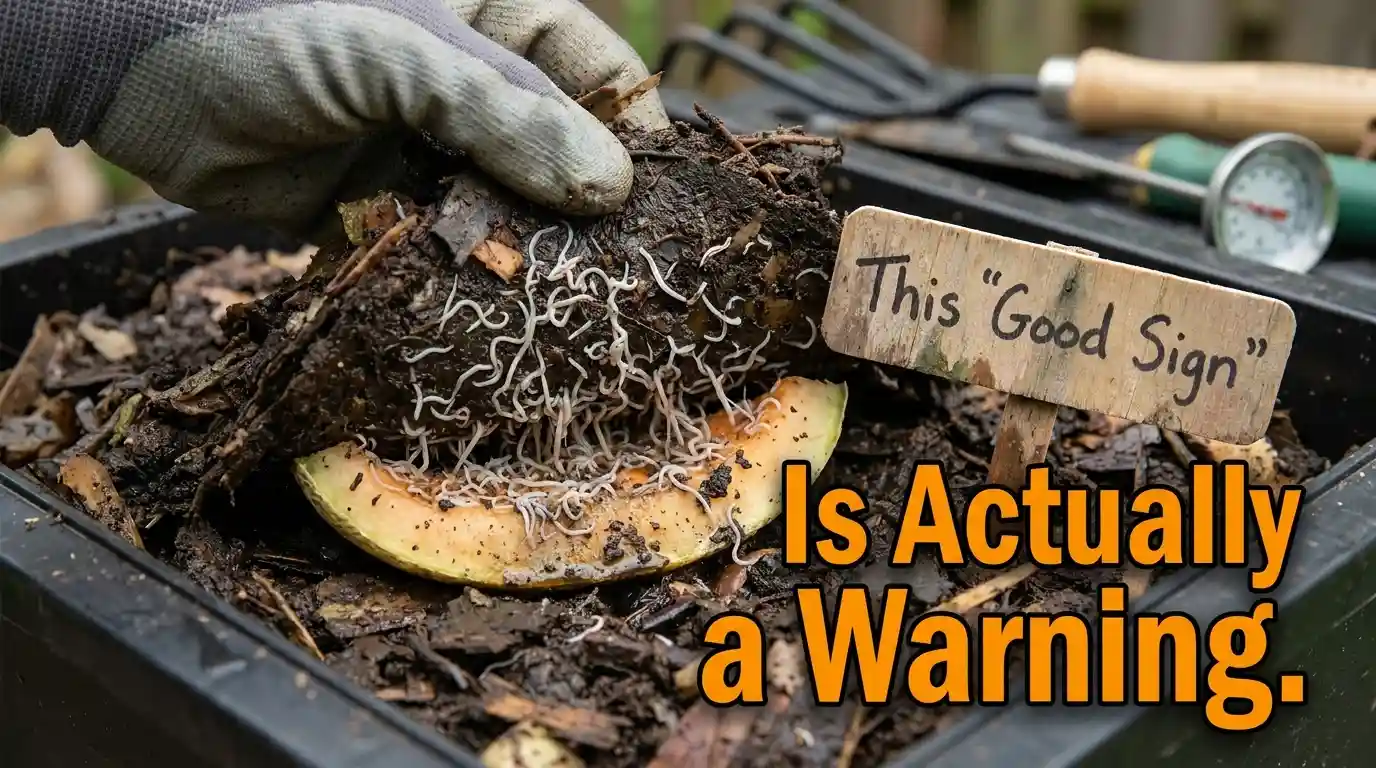

The thing you think means your worms are doing well? It actually means the opposite.
Stop celebrating fast breeding.
Most worm bin guides say: more baby worms, more cocoons, more tiny pink worms everywhere – that means success. That’s not true. It’s the opposite.
A sudden jump in worm population means your worm bin is in trouble. It is not a sign that things are going well.
Remember: Worms don’t breed faster because life is good for them. They breed faster because they sense things are about to get worse. The bin may be too crowded, too hot, or too acidic (too sour). When this happens, the worms try to make sure their species survives.
1. What’s really happening
Picture this: you check your bin and see it covered in tiny worm cocoons (egg cases). Hundreds of them. You post a photo online. Everyone says “great job!”
Three weeks later, half your worms are dead.
Worms breed fast when their living conditions get bad. Too many worms in one space, too much acid from citrus peels or coffee grounds, or a bin that’s too warm – all of these cause a breeding surge. The worms are making more worms before the bad conditions can kill them off.
Warning: If your bin suddenly looks full of baby worms, don’t assume you did everything right. First check the acid level (pH), the temperature, and how crowded the bin is.
A full breakdown of common bin failures and fixes is covered in signs your worm bin is unhealthy and how to fix each one.
2. Old way vs. new way of checking your bin
Old way: Count the cocoons. More cocoons means a healthier bin. Keep doing what you’re doing.
New way: A sudden rise in cocoons means you need to check right away. Look at moisture, food amount, and crowding. Treat it as a warning sign, not something to be proud of.
The old way can lead to a dead bin within a month. You’ve probably seen this happen in an online worm group.
3. How to check your bin
- Check how crowded it is. More than 1 pound of worms per square foot of surface space means it’s too crowded.
- Check the acid level (pH). Use a simple test strip. A reading below 6.0 means your worms are stressed. For more on what’s actually happening at different pH levels, Cornell Composting’s worm bin troubleshooting guide breaks down the most common bin problems and their fixes.
- Feel the bedding temperature. If it’s too hot for your hand to stay in comfortably, it’s too hot for the worms too.
If two out of these three things look bad, you’ve found the problem.
Tip: Take out some castings (worm waste) and split the bin into two as soon as you see a sudden rise in cocoons. Don’t wait until things get worse.
4. What a truly healthy bin looks like
A bin that is really doing well looks boring. The worm population grows slowly and steadily. The worms stay near their food, not climbing up the sides of the bin.
Signs that your bin is actually fine:
Worms stay buried during the day. The bedding smells like soil, not like ammonia. New cocoons appear slowly over time, not all at once.
Boring is good. Boring means stable.
5. Where this advice doesn’t always apply
This isn’t true for every bin every time. New bins often see a jump in population during the first 6 to 8 weeks as the worms settle in. That is normal. It’s not a sign of stress.
The difference is in timing. A slow, steady rise in a new bin is normal. A sudden spike in an older, settled bin is a warning sign.
Things to think about:
- The type of worm matters. Red wigglers make cocoons more easily under stress than European nightcrawlers. If you’re deciding which species to use in the first place, this worm species comparison covers how different worms behave under stress.
- The climate matters. A bin in a hot Indian summer acts differently than one in a cool basement.
- You can’t tell what’s wrong from cocoon count alone. Always also check the pH and the temperature.
Warning: Don’t split a perfectly normal new bin into two just because it has more cocoons than your old bin did.
Where to start
- Check your bin today. Count the cocoons, check the pH, and feel the bedding temperature.
- If two out of three signs point to stress, split the bin and reduce crowding right away.
- Stop using cocoon count as a score to be proud of. Start treating it as a smoke alarm.
Your worms aren’t celebrating. They’re getting ready for the worst. Listen to them before they’re right.

Leave a Comment