

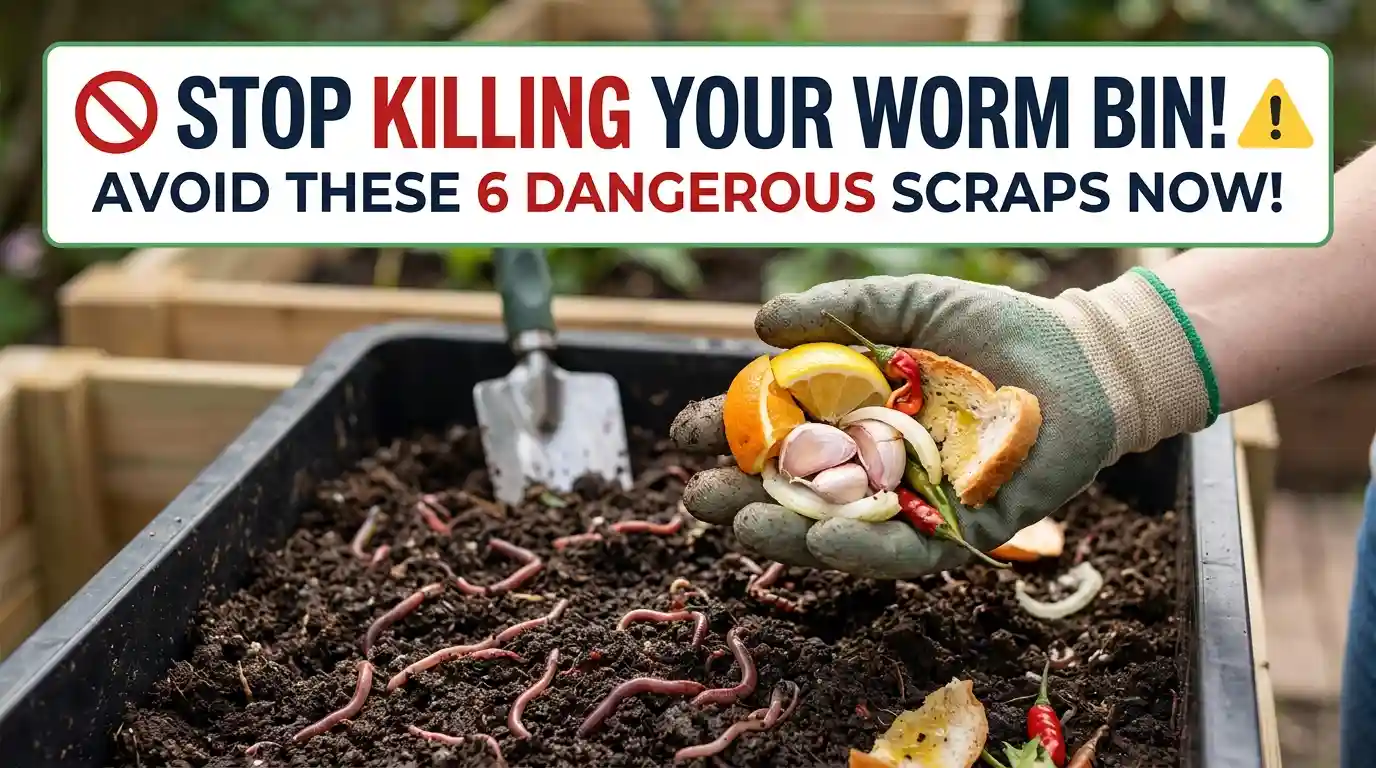

Most worm bin deaths aren’t sudden. The bin doesn’t just collapse overnight. It dies slowly – over weeks – while you keep adding scraps, wondering why the worms are sluggish, why it smells wrong, why the population keeps shrinking.
In most cases, the killer is already in your kitchen.
Here are six common scraps that quietly wreck healthy worm bins, and what to do about each one.
1. Citrus Peels
Orange rinds, lemon skins, lime peels – they look like perfect compost material. They’re not.
Citrus is highly acidic. A healthy worm bin needs a pH between 6.5 and 7.5. Drop below 6.0 and the colony starts dying. The trouble is, this shift happens gradually. A few peels a week over a month is enough to push a healthy bin over the edge.
Signs you’ve gone too far: worms bunching at the edges, white mites multiplying fast, the bin smelling sour.
Fix: Remove all citrus. Add crushed eggshells or a small amount of agricultural lime to bring the pH back up. Check with a basic soil pH strip before feeding again.
2. Onions and Garlic
Onions, garlic, leeks – the whole family causes problems. They contain sulfur compounds that irritate worm skin. Since worms breathe through their skin, anything that damages it is dangerous.
You won’t see mass death right away. A clove here, half an onion there – the harm builds. By the time the population drop is obvious, months of slow exposure have already done the work.
Fix: Compost alliums (the onion family) in a regular outdoor heap. Keep them completely out of the worm bin.
3. Dairy Products
Cheese, milk, yogurt – worms don’t eat dairy. They just let it rot.
As it breaks down, dairy releases ammonia. Ammonia is toxic to worms even in tiny amounts. A single chunk of old cheese can heat the bin, spike ammonia levels, and trigger a die-off. On top of that, dairy attracts flies and rodents faster than almost anything else.
The bin often smells fine in the early stages. By the time the ammonia hits your nose, the damage is already done.
Fix: No dairy in the worm bin. Not occasionally. Not in small amounts. None.
4. Meat and Fish Scraps
Same idea as dairy, but worse and faster. Meat and fish rot quickly, generate more ammonia, and bring in pests – maggots, flies, and rodents if the bin is outdoors.
There’s a belief that worms will eat anything organic. They will, eventually. But they work best on plant matter. Raw protein overwhelms the bin before worms can process it.
Fix: Meat and fish go in a regular bin or a bokashi system (a fermentation-based composting method). Not here.
5. Spicy Food Scraps
Chili seeds, hot sauce residue, leftover spicy food – capsaicin (the compound that makes food hot) stresses worms. It doesn’t kill them outright. It keeps them in a constant state of irritation where they can’t feed or breed properly.
A stressed worm doesn’t reproduce. A colony that doesn’t reproduce slowly shrinks.
One simple test: if it would burn your bare hand, it will stress your worms. Spicy curry scraps, chili-marinated vegetables, hot sauce containers – all of it.
Fix: Remove any food with visible chili, heavy spice, or hot sauce coating before it goes in the bin.
6. Salty or Processed Food
Salt is one of the fastest worm killers and it’s hidden in most processed food.
Worms are roughly 75–80% water. Salt pulls moisture out of their bodies through osmosis – the same process that makes a slug shrivel when you add salt to it. It’s quick and effective.
The problem is you can’t taste the salt levels in processed food the way your worms experience it. Chips, packaged snack scraps, leftover takeaway, soy sauce-coated vegetables, salted nuts – all of it carries enough sodium to cause damage over time.
Fix: Rinse anything salty before it goes in. Better still, leave processed food out entirely.
The Quick Check Before You Add Anything
Two questions. That’s all you need.
Is this acidic, pungent, salty, or from an animal?
Would this repel insects if left out in the open?
Yes to either – skip it. The safest worm bin foods are raw vegetable scraps, plain cooked grains, coffee grounds in small amounts, and shredded cardboard. That’s more than enough to run a healthy, productive bin.
What to Do If Your Bin Is Already Struggling
Stop feeding for 5–7 days. Remove anything that doesn’t look right. Let the bin stabilize before introducing food again.
Worms handle a gap in feeding without any problem. What they can’t handle is a steady intake of the wrong thing.
If the bin still smells off after removing the problem scraps, the bedding itself usually needs refreshing — our DIY worm bedding guide walks through the exact reset process.
The bin usually recovers once the damage source is gone. It just takes time – and that time is much shorter if you catch it early.

Leave a Comment