

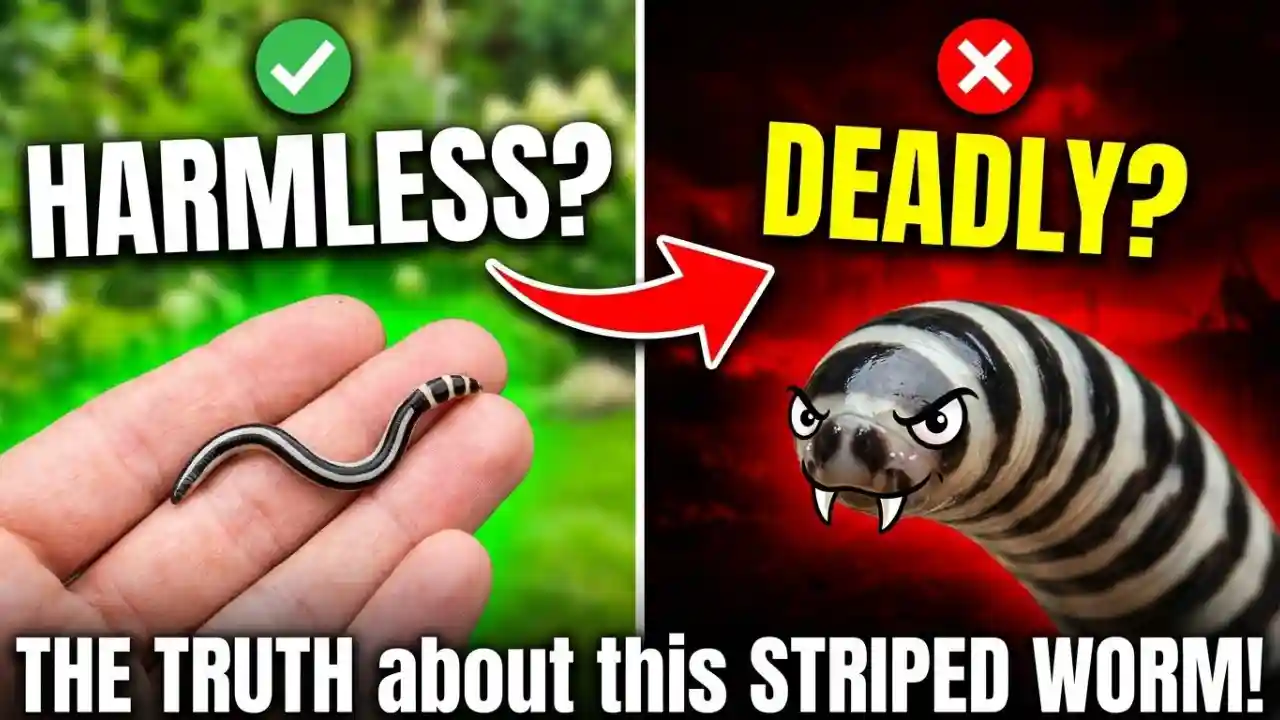

You found a worm in your garden. Black and white stripes. Weird pattern, wriggling fast.
First thought: is this dangerous?
Short answer: almost always no. But “almost” matters, and I’ll show you when it doesn’t.
Most people panic the second they see stripes on anything. Stripes mean warning in nature, right? Bees, wasps, snakes.
So a striped worm feels like a red flag. But worms don’t play by that rulebook. The pattern is usually about camouflage or diet, not defense.
1. What Is a Black and White Striped Worm?
There isn’t one single species behind this description. “Black and white striped worm” is a description, not a species name – and that’s the first mistake people make.
Say you find one under a rotting log. Chances are it’s a type of milkpede or a banded earthworm variant – segmented, slow, harmless.
Say you find one near standing water, thin and fast-moving. That’s more likely a planarian flatworm, and those come with their own rules (we’ll get there).
Same description. Two completely different creatures – and if you’re sorting through what’s crawling in your bin at home, it helps to know your white worms in compost aren’t automatically bad either – color alone rarely tells the full story.
2. Garden Worm vs. Flatworm
Here’s the contrast that actually matters.
Old way of identifying worms: look at color, panic or relax, move on. New way: check where you found it, how it moves, and what it’s near.
A banded earthworm in soil? Slow, segmented, good for your garden. It’s aerating dirt and breaking down organic matter while you sleep. Leave it alone – it’s working.
A hammerhead flatworm, black and white striped, found on damp soil after rain? Different story. These are invasive in parts of the US, they eat earthworms (the good guys), and some species secrete a mild neurotoxin called tetrodotoxin. CNN reported that these worms are now widespread across New York and likely much of the country.
Not deadly to humans through skin contact. Still – wash your hands if you touch one. Don’t chop it in half either. (Yes, really – they can regenerate from fragments. Chopping makes two worms, not zero.)
3. How to Identify Yours in 3 Steps
- Check the head. Hammerhead flatworms have a distinct fan-shaped or crescent head. Earthworms don’t – just a tapered tip.
- Check the texture. Segmented body, slightly ridged? Earthworm family. Smooth, slick, almost slimy? Flatworm.
- Check the location. Compost, deep soil, under logs – probably harmless. On top of soil after heavy rain, moving fast in daylight – flag it as a possible flatworm.
Three checks. Two minutes. That’s your ID.
4. What These Worms Are Actually Good At
Most striped worms – the earthworm-family ones – are doing real work. They cycle nutrients back into soil. They improve drainage. Gardeners pay for what these things do for free.
And it’s not just the common types – even lesser-known composters like Indian Blue Worms have their own underrated strengths worth knowing about.
Even flatworms, invasive as they are, aren’t a threat to your health. No stings, no bites, no real danger to people or pets in normal contact.
5. Honest Limitations
Here’s where I won’t oversell it.
If you’ve got hammerhead flatworms, there’s no easy fix. Pesticides barely work – they’re resistant to most common ones.
The only reliable method is manual removal: salt or vinegar, sealed in a bag, thrown out. Not composted.
Composting just relocates the problem. And if you’re hoping this article confirms your worm’s exact species – it might not.
There are dozens of banded, striped, and spotted worm variants worldwide, and some genuinely need a lab or an expert entomologist to nail down. I’m not going to pretend a blog post replaces that.
Where to Start
Go back outside. Look at the head shape. Look at the location. Ninety percent of the time, you’ll land on “garden worm, leave it be.”
If it’s flat, fast, and fan-headed – bag it, don’t chop it, don’t compost it.
Stripes aren’t a warning label. They’re just a pattern.

Leave a Comment