

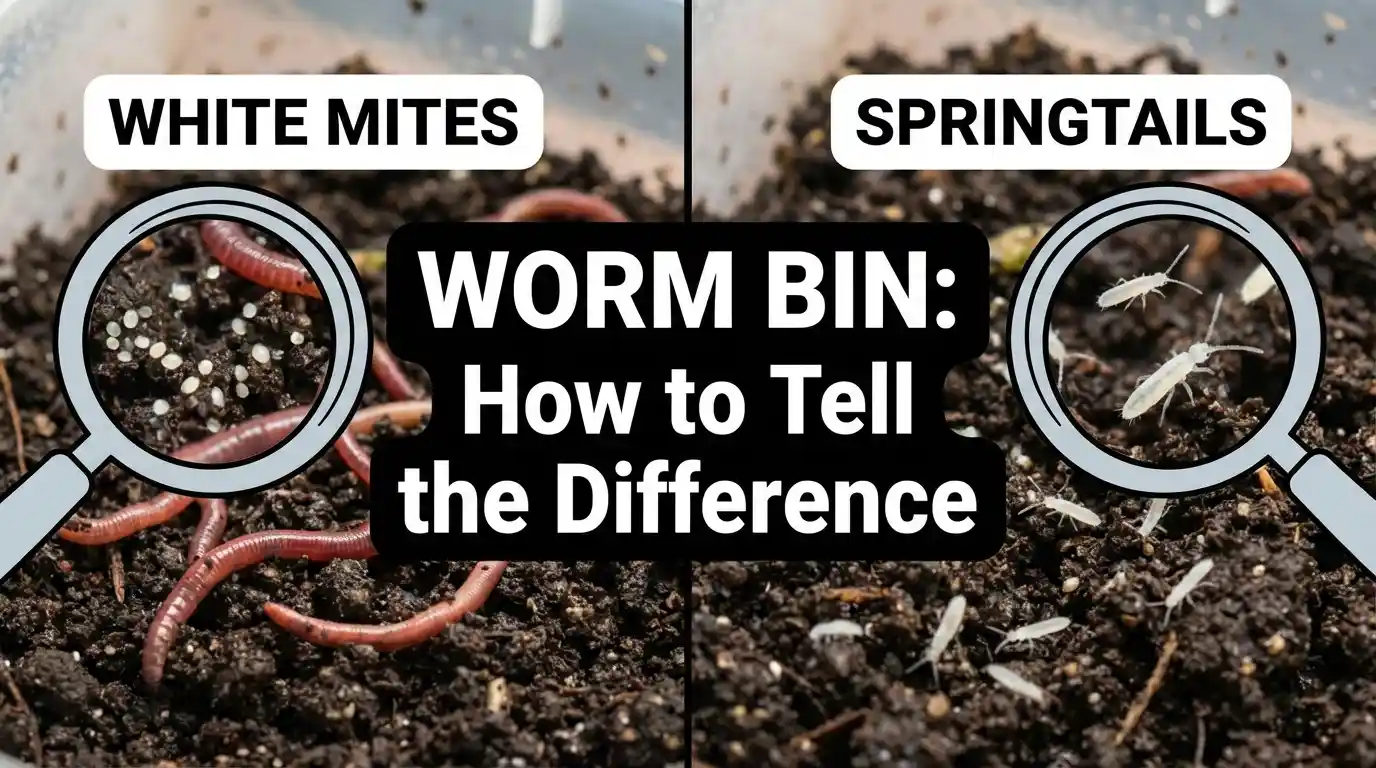

If you notice tiny white bugs in your worm bin, the two most likely suspects are white mites and springtails. They both thrive in damp compost conditions, but they are not the same.
White mites are usually rounder, shinier, and slower, while springtails are slimmer, faster, and may appear to hop when disturbed. In most cases, neither is a disaster, but a sudden population boom can be a sign that your bin is too wet, overfed, or poorly balanced.
Why people confuse white mites and springtails
Both are tiny. Both are pale or white. Both love moisture. And both show up in active, thriving worm bins. It’s no surprise that worm-bin guides and community forums are full of people asking the same question: which one is this?
Worth noting: if what you’re seeing looks less like a crawling bug and more like a thin, thread-like creature, you may actually be dealing with something else entirely. White worms in compost are another common find that gets mixed up with mites and springtails — and they come with their own set of signals to watch for.
The confusion is harmless – until you treat the wrong bug. Springtails don’t need to be removed. Mites sometimes do. Getting them mixed up means either panicking over nothing or missing a genuine imbalance in your bin.
What white mites look like
White mites in a worm bin are:
- Rounder or more oval in shape — almost bead-like
- Shiny or glassy in appearance, especially under good light
- Slow-moving — they crawl deliberately rather than darting
- Clustered on wet food scraps, damp bedding, bin walls, or under the lid
- Easy to mistake for tiny eggs until you watch them move
If you want a closer look at how different mite species behave in compost environments, Gardening Know How’s guide on soil mites in compost gives a solid breakdown of the slower-moving varieties — which closely match what most worm bin keepers encounter.
What springtails look like
Springtails are just as small but carry a noticeably different profile:
- Slimmer and longer — more like a grain of rice than a bead
- Faster-moving, often scurrying across damp surfaces
- Sometimes jump or flick when you disturb them — that spring-like movement is their giveaway
- Typically found in wet bedding and areas with heavy fungal activity
White mites vs springtails: the easiest differences
Here’s the side-by-side you actually need:
| Feature | White Mites | Springtails |
|---|---|---|
| Shape | Round, oval | Long, slim |
| Movement | Slow crawl | Fast; may jump |
| Appearance | Glassy, bead-like | Grain-of-rice look |
| Bin signal | Moisture, acidity, overfeeding | Damp conditions, fungal activity |
| Concern level | Low–moderate | Low |
Are white mites harmful?
Usually not to healthy worms – but a large outbreak is a warning sign worth taking seriously.
White mites tend to thrive when your bin is too wet, too acidic, or being overfed. They don’t typically attack healthy worms, but they may gather on worms that are already weak or dying.
Think of them less as a pest and more as a symptom: high numbers mean something in the bin is off.
Are springtails harmful?
No. Springtails are considered beneficial in worm bins.
They feed on fungi, microbes, and decomposing organic matter – essentially doing the same job as your worms, just on a smaller scale. A lot of springtails usually just means your bin is moist and biologically active. That’s not a bad thing.
It’s also worth keeping in mind that springtails and fungi often go hand in hand. If your bin is currently hosting both springtails and unexpected fungal growth, our guide on mushrooms in a worm bin explains why that happens and whether you need to act on it.
What each one says about your worm bin
This is where identification really pays off.
Lots of white mites? Your bin is probably too wet, too acidic, or getting more food than it can process. Mite outbreaks are the bin’s way of saying: slow down and dry out.
Lots of springtails? Your bin is damp and fungal activity is high — but it’s not necessarily failing. Springtails are part of a healthy decomposition ecosystem. You only need to act if things feel genuinely waterlogged.
What to do if you find white mites
If mite numbers are climbing, here’s how to bring them back down:
- Pause feeding for a few days and let the bin process what’s already there
- Remove rotting wet food sitting on the surface
- Add dry shredded cardboard to absorb excess moisture
- Improve airflow — prop the lid slightly or add ventilation holes
- Bury food scraps rather than leaving them on top
- Use a bait trap — a slice of melon or raw potato left overnight will attract clusters you can remove in the morning
What to do if you find springtails
In most cases: leave them alone.
Springtails are doing useful work. If their numbers feel extreme, reduce surface moisture and add dry bedding. But don’t try to eradicate them — they’re on your side.
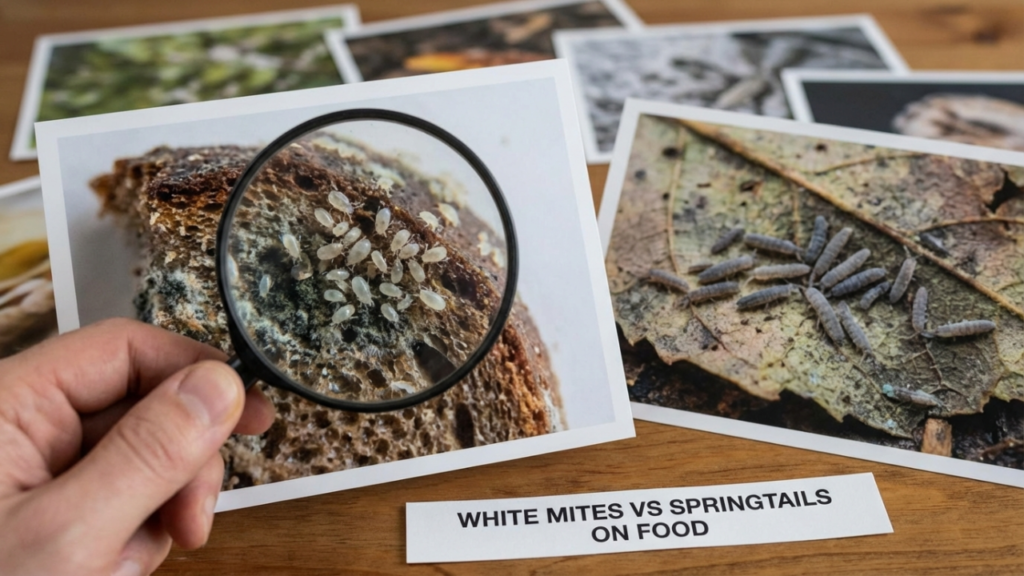
One close-up of white mites on food
Bottom Line
White mites and springtails are easy to confuse — but they send different messages. Springtails are allies. White mites in high numbers are a nudge to adjust moisture, feeding, or acidity. Now that you can tell them apart, you’ll know exactly how to respond.
Frequently Asked Questions
Are white mites and springtails the same?
No. White mites are usually rounder, shinier, and slower, while springtails are slimmer, faster, and may jump when disturbed.
Which is worse in a worm bin: white mites or springtails?
Springtails are generally considered beneficial. White mites are often harmless too, but a heavy mite outbreak is more likely to signal an imbalanced worm bin.
Do springtails hurt composting worms?
Current worm-bin guidance generally describes springtails as harmless or beneficial because they feed on fungi and decaying organic matter.
Do white mites kill worms?
Usually not healthy worms. They are more often associated with decaying material and may gather on weak or dying worms.
Why do I have so many tiny white bugs in my worm bin?
A boom in either mites or springtails usually means the bin is very moist, rich in decaying food, and active with microbes or fungi. With mites especially, overfeeding and acidity are common triggers.

Leave a Comment