

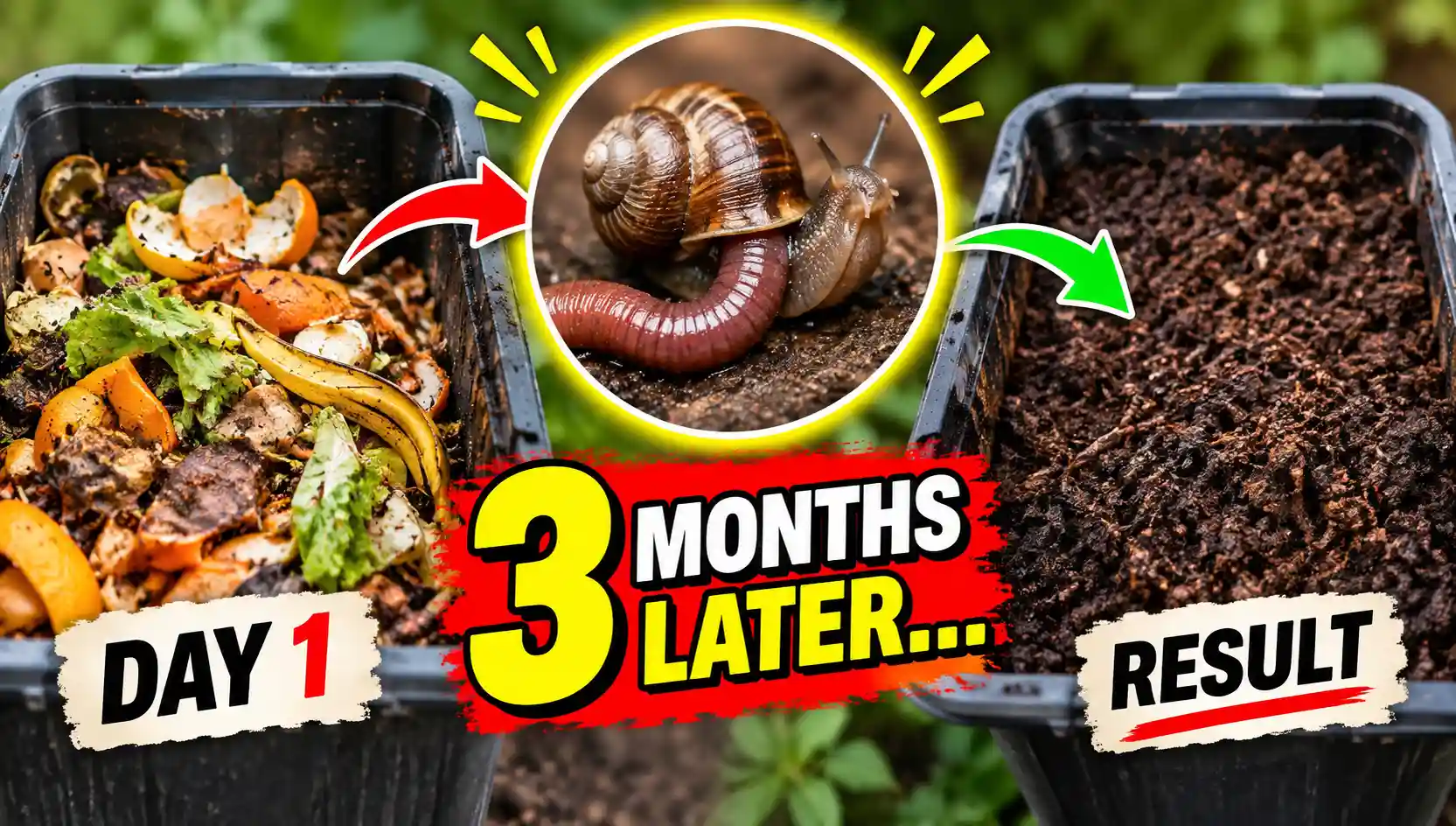

Most people panic the moment they spot a snail in their worm bin. Don’t. In most cases, it’s not the emergency it looks like.
Vermicomposting attracts more than just worms – snails, mites, and springtails often show up uninvited, and one of the more common visitors is what’s casually called a “worm snail,” a small snail that thrives in the same moist, organic-rich environment your worms love.
What a Worm Snail Actually Is
These snails aren’t parasites and they don’t prey on worms. They’re detritivores – they eat decaying plant matter, the same food source your worms are breaking down. In small numbers, they’re mostly harmless bystanders in a shared ecosystem, similar to the mites and springtails that make up a compost bin’s broader food web.
The confusion happens because people assume anything crawling in a worm bin must be competing with or harming the worms directly. That’s rarely true. Worms and snails aren’t natural enemies; they’re more like roommates with overlapping diets.
The “So What”: When It Actually Matters
A single snail or two is not a red flag. What’s worth watching for:
- Population spikes – a sudden explosion of snails usually signals excess moisture or too much easily-digestible food, not a worm-snail conflict
- Mold or sour smell alongside snails – this points to overfeeding or poor aeration, not the snails themselves
- Worm activity slowing down – if worms seem sluggish, check moisture and bedding pH before blaming the snail
- Bin overcrowding – too many organisms competing for the same food can stress a small bin regardless of species
If none of those symptoms show up, a worm snail is just part of a healthy, active decomposition environment – not a threat. If you’re trying to sort out which bin visitors are harmless and which aren’t, it helps to work through an identification guide for less obvious bin dwellers before assuming the worst.
What Most People Get Wrong
The instinct is to remove every snail on sight. But snails contribute to the same breakdown process worms do – they shred and soften organic matter, which can actually make food more accessible to worms and speed up decomposition in some cases.
Treating every non-worm organism as an invader misunderstands how a vermicomposting bin actually functions: it’s a small ecosystem, not a worm-only farm.
The better question isn’t “how do I get rid of the worm snail” – it’s “is my bin’s balance off.” The snail is usually a symptom of bin conditions, not a cause of a problem.
If You Do Want Fewer Snails
If numbers do get out of hand:
- Reduce moisture slightly – snails thrive in wetter conditions than worms strictly need
- Cut back on very soft, wet food scraps that snails process faster than worms
- Hand-remove excess snails during routine bin checks rather than trying to eliminate them entirely
None of this requires pesticides or drastic bin changes – vermicomposting pest issues, including excess moisture that draws in other unwanted bin guests like fungal growth, are almost always a moisture or feeding-ratio fix.
So the next time a worm snail turns up, the honest answer is: it’s probably telling you more about your bin’s moisture and feeding balance than anything about your worms being in danger.
What’s actually in your bin right now – worms alone, or a small ecosystem you haven’t looked closely at yet?

Leave a Comment